
DCA's best-kept secrets revealed — hidden Mickeys, Easter eggs, architectural details, Cars Land construction facts, and the details only repeat visitors ever notice.
Save up to $30 on Disney California Adventure Tickets
Discount tickets through our trusted partners — same parks, less money.
Introduction
Most guests who visit Disney California Adventure see the surface. The rides, the food, the characters. The obvious things.
The guests who have been coming back for years see something different. They see the solar panel Mickey behind Radiator Springs Racers that is only visible from above. They know that the Cars Land buttes are not painted walls. They find the Lamplight Lounge vault room that seats thirteen guests in a space most people walk past without noticing. They stop in Avengers Campus and look at the buildings instead of walking through them on the way to rides.
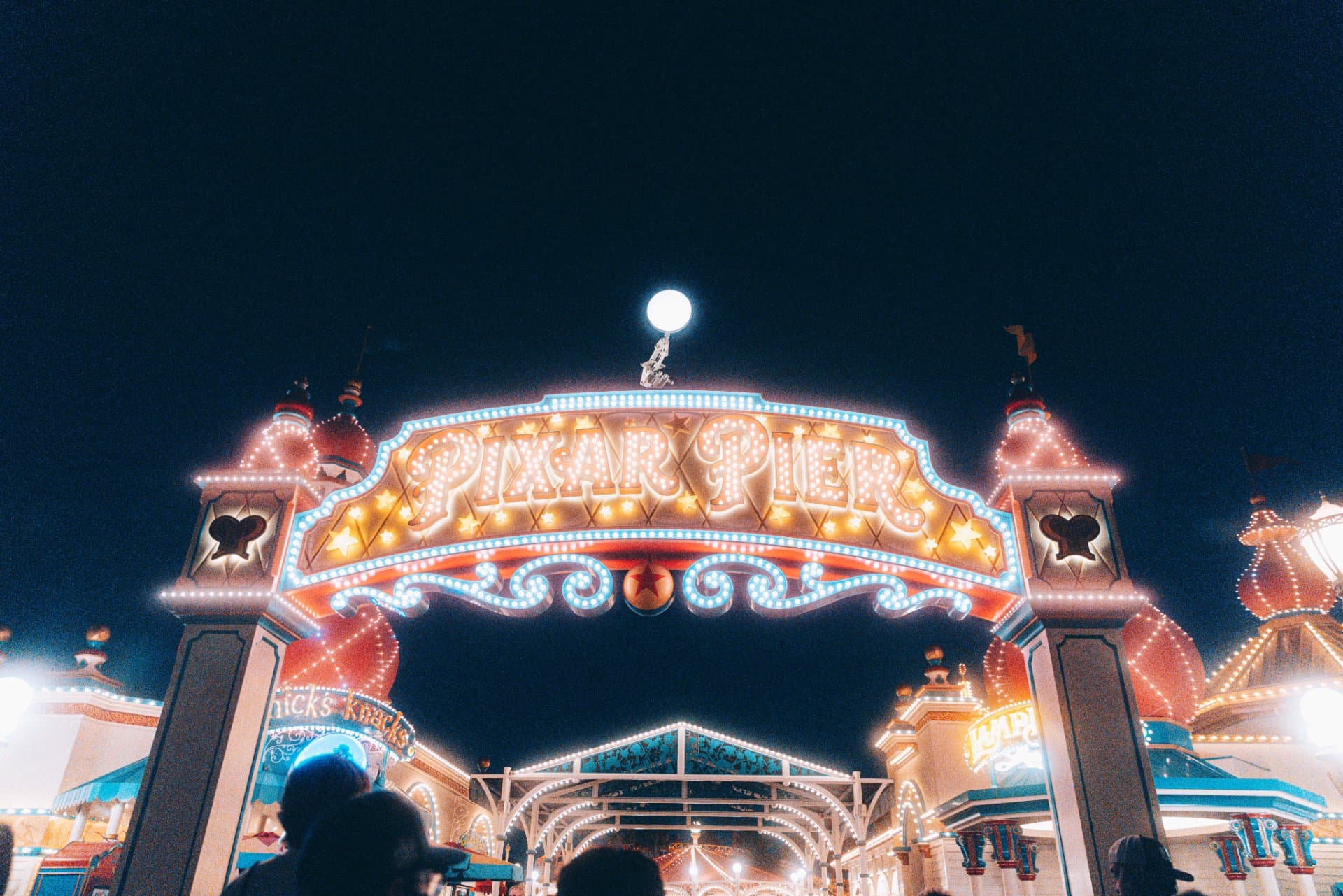
DCA is a newer park than Disneyland — it opened in 2001, a full 46 years after Disneyland — and it does not have Disneyland's 70 years of accumulated secret history. But the secrets it does have are genuinely extraordinary, particularly in the areas that received the deepest Imagineering investment: Cars Land, Avengers Campus, and the Pixar Pier waterfront.
This guide covers everything worth knowing — the hidden Mickeys with exact locations, the architectural secrets most guests never register, the Easter eggs embedded in the most detailed queues, and the spaces and experiences that exist in the park without ever being announced.
Part 1 — Cars Land Secrets
Cars Land is the most faithfully detailed recreation of an animated film environment ever built by Disney Imagineering. The secrets here are not minor Easter eggs — they are fundamental design decisions that most guests never know about even after dozens of visits.
The Buttes Are Not Painted Walls
The single most consistently surprising revelation I share about DCA: the Cadillac Range buttes surrounding Cars Land are not two-dimensional painted backdrops or projection surfaces. They are fully three-dimensional structures — essentially artificial rock formations built from steel armatures covered in hand-sculpted rockwork finished with precisely calibrated paint.
The color wasn't chosen from a swatch book. Disney Imagineers studied the actual geological coloring of the American Southwest desert formations depicted in the Pixar film — the Iron oxide reds, the sandstone tans, the shadowed purples — and mixed custom paint formulas to match them. The buttes are then re-painted and touch-ups applied seasonally to maintain the exact color accuracy.
Walk to the base of the buttes and look at the surface texture at close range. What appears from a distance to be natural rock surface is hand-applied sculpting work — individual stone faces, crack patterns, erosion details — applied by a team that spent months building the geological story of a place that technically does not exist.
What most guests miss: The butte color changes throughout the day as the light angle shifts. At noon the color reads differently from golden hour. The Imagineers specifically modeled the butte color after the particular quality of desert light in late afternoon — which is why Cars Land at golden hour produces the most film-accurate version of the environment. The buttes at 6:30pm in summer look like they were painted by the same sun that painted the Arizona desert.
The Neon Signs Are Historically Accurate
Every neon sign along the Radiator Springs main street in Cars Land was designed by Imagineers who researched actual Route 66 neon sign archives extensively. The specific font choices, the color combinations, the structural designs of the signs — all reference real Route 66 signage from the 1950s and 1960s.
The Cozy Cone Motel sign specifically references a real historical motel sign type — the blinking animated neon that creates the illusion of motion — using a technique that was common on actual Route 66 properties but has largely vanished from the American landscape.
The secret timing: The signs fully activate approximately 30 to 45 minutes before sunset and continue through park close. The period immediately after activation — when the signs are fully lit but the sky still carries some daylight — produces the most photographically interesting version of the Cars Land main street because the neon contrasts with the remaining sky color rather than simply glowing against darkness.
The Solar Panel Mickey Behind Radiator Springs Racers
This one requires either a very high vantage point or knowledge that it exists. On the rooftop structures behind the Radiator Springs Racers attraction building, a set of solar panels is arranged in the classic three-circle Mickey Mouse head silhouette — the large head circle and two ear circles — visible from above.
You cannot see this from ground level within the park. Guests in the upper gondolas of the Pixar Pal-A-Round ferris wheel on clear days can sometimes make out the arrangement if they know where to look. Aerial photographs of DCA make it obvious — the solar panel Mickey is clearly visible in any overhead image of Cars Land.
This is the largest Hidden Mickey at the Disneyland Resort by physical scale. Most guests at DCA have no idea it exists.
The Route 66 Mile Markers
Embedded in the pavement of Cars Land's main street, mile markers reference actual Route 66 geography — specific distances from real towns along the historic highway. The markers are not simply decorative numbers — they correspond to actual mileage calculations from real Route 66 reference points, reflecting the research Imagineers did to make the Cars Land environment feel geographically authentic.
Walk slowly down the Cars Land main street and look at the pavement details at your feet. The mile markers are easy to miss because they blend into the overall surface design — but once you know to look for them they are clearly present.
The Water Tower Date
The water tower visible in Cars Land bears the founding date of Radiator Springs — 1909 — which is referenced in the Cars film backstory as the year Stanley discovered the radiator spring that gave the town its name. This is the in-universe history of Radiator Springs made literal in the environment, a piece of worldbuilding consistency that rewards guests who know the film deeply enough to recognize it.
Part 2 — Avengers Campus Secrets
Avengers Campus was designed to be discovered rather than merely visited. The secrets here are built into the architecture, the cast member behavior, and the physical details of the land itself.
The Battle Damage Is Intentional
Every building in Avengers Campus shows evidence of superhero combat — structural repairs in progress, scorched surfaces, impact craters patched with newer materials, windows replaced at different times. This damage is not the result of actual construction irregularities. It is deliberate.
The Imagineers who designed Avengers Campus worked with Marvel Studios to establish a narrative history for each building that explained exactly what had happened to it. The Stark Industries headquarters building shows impact damage from a specific incident in the Marvel timeline. The Collector's Fortress shows damage from the confrontation that freed the Guardians.
Walk through Avengers Campus slowly and look at the building surfaces at mid-height — not at the signage, not at the architectural details, but at the surfaces between. The damage patterns tell stories that most guests never read.
The Quinjet Is Full Scale
The Quinjet mounted above the Collector's Fortress entrance is a full-scale replica of the aircraft as it appears in the Marvel Cinematic Universe films — not a scaled-down display piece or a facade. The landing gear configuration, the wing angle, and the surface weathering were all developed in consultation with Marvel Studios using the actual production design files from the films.
Stand directly below the Quinjet and look upward. The scale only becomes apparent from this angle — most guests approaching the campus see the Quinjet from a distance and mentally scale it down to what they expect a mounted display piece to look like. From below, the actual size is genuinely surprising.
The Web Fluid Cartridges Are Everywhere
Throughout Avengers Campus, small web fluid cartridges — cylindrical containers with the WEB lab logo and quantity markings — are mounted at various heights on walls, poles, and structures. These are the in-universe explanation for how Spider-Man maintains his web-shooting capability on campus — he stops to resupply from these distribution points.
Once you know to look for them they are visible throughout the campus on structures you have walked past many times without noticing. The cartridges also appear in the WEB-SLINGERS queue as part of the in-universe laboratory environment.
The Cast Members Are Actually In-Universe Citizens
This is not a secret in the sense of being hidden, but it is a reality that most guests treat as theater rather than engaging with genuinely: every cast member in Avengers Campus is playing a character in the Marvel universe, not a Disney cast member.
They respond to questions about the Avengers as though the Avengers are real people they work alongside. They acknowledge the battle damage on the buildings as something that actually happened. They discuss the Collector's Fortress as a known location in their world.
Ask a cast member about the Quinjet. Ask them what happened to the building facade near the fortress entrance. Ask them if they have seen Spider-Man today. The answers, delivered in character by well-trained cast members who know the Marvel universe deeply, produce some of the best spontaneous interactions available in either park. Most guests never try.
The Character Performances Are Unannounced
The elaborate character performances in Avengers Campus — Spider-Man on the web rig, Doctor Strange's magic demonstration, Thor with Asgardian warriors — appear on no fixed posted schedule. They happen throughout the day at irregular times as part of the in-universe campus narrative.
If you see a crowd forming and people looking upward or toward the fortress, stop. Something is about to happen. The performances range from 3 to 10 minutes and are genuinely theatrical — choreographed sequences with specific Marvel Universe storytelling rather than standard meet-and-greet formats.
The best window for character appearances in Avengers Campus is the late morning, roughly 9:30am to 11:30am, when the campus is active with the most character energy of the day. But appearances happen throughout operating hours — the only way to catch them is to spend time in the campus and pay attention to what is happening around you.
Part 3 — Pixar Pier and Paradise Bay Secrets
The Lamplight Lounge Vault Room
Lamplight Lounge at Pixar Pier has a secret seating area that most guests have never seen. Hidden behind a bookshelf-style door in the restaurant's interior is a private vault room that seats approximately thirteen guests — a fully enclosed small dining space decorated with Pixar reference art and themed to the aesthetic of a private screening room.
The vault room can be requested when making a reservation and is available on a first-come basis for dining reservations that include the appropriate group size. It is not advertised on the Disneyland website or in the Disneyland app as a distinct option — it is available to guests who specifically ask for it when booking or checking in.
This is the best-kept secret in DCA's dining scene. If you are booking a group dinner at Lamplight Lounge and your party fills the room, call the restaurant directly and ask about vault room availability. The experience of dining in the private vault room during World of Color is a genuinely special event that most Lamplight Lounge regulars have never experienced.
The Pixar Ball in the Waves
Throughout Pixar Pier's decorative elements — on merchandise, signage, murals, and architectural details — the iconic yellow and blue Pixar ball appears embedded in wave and water imagery. This is a Pixar signature across the studio's films — the same ball appears as a hidden element in numerous Pixar films as a studio Easter egg.
Look specifically at the wave motifs in the ironwork along the Pixar Pier boardwalk fence. The ball is incorporated into several of the wave crest designs. Once you find the first one it becomes a game to identify the rest.
The Hidden Mickeys in the Ferris Wheel Structure
The Pixar Pal-A-Round ferris wheel structure contains several Hidden Mickey configurations in its spoke and support framework. The most confirmed one is visible from the gondola loading area — three circular elements in the support framework form a classic Mickey silhouette when viewed from the correct angle.
Like most structural Hidden Mickeys, this one requires knowing the specific angle of view. Standing at the gondola loading platform and looking upward toward the spoke structure at approximately the 2 o'clock position on the wheel typically reveals it.
The "Luxo Jr." Ball on the Boardwalk
Embedded in the boardwalk pavement of Pixar Pier, a yellow and blue Luxo Jr. ball pattern appears multiple times in the pavement design — Pixar's classic animated ball from the studio's original 1986 short film that preceded the company's first feature. The ball was later adopted as the Pixar brand symbol visible in every studio ident.
The pavement balls are larger than the balls embedded in ironwork and relatively easy to find once you are looking at the boardwalk surface rather than straight ahead.
Part 4 — Grizzly Peak and San Fransokyo Square Secrets
Grizzly River Run's Wildlife Is Historically Specific
The animal species depicted in the Grizzly River Run environment — the bears, deer, eagles, and other wildlife visible throughout the ride and surrounding area — are not generic California nature illustrations. They are specific species native to the Central and Northern California wilderness regions that Grizzly Peak is meant to evoke.
The Imagineers who designed the ride consulted with naturalists to ensure that every visible animal is a species that would actually be found in the specific type of California wilderness depicted. The level of ecological specificity in the Grizzly Peak design is rarely discussed because it is easy to overlook, but it reflects a commitment to accuracy that is characteristic of the best Disney Imagineering work.
The Grizzly Peak Bear Silhouette
The mountain peak structure of Grizzly Peak — the artificial rocky summit visible above the Soarin' building and the surrounding Grizzly Peak environment — is designed to read as a bear's head from specific vantage points within the land. The silhouette of the peak, when viewed from the main path approaching from San Fransokyo Square, resembles a bear profile looking to the left.
This is a subtle design choice that rewards guests who step back from the immediate path and look at the overall skyline shape. It is not obvious enough to be noticed casually but clear enough that once you see it, you cannot unsee it.
San Fransokyo Square Signage Is Bilingual in Specific Ways
Get Our Free Disneyland Trip Planner
Save up to $30 on Disney California Adventure Tickets
Discount tickets through our trusted partners — same parks, less money.
The signage throughout San Fransokyo Square blends English and Japanese in ways that are linguistically accurate rather than aesthetically decorative. The Japanese characters on storefronts and directional signage are actual Japanese — specific words and phrases that correspond to the in-universe businesses and services depicted — rather than invented characters that merely look Japanese.
This is a detail that Japanese-speaking guests notice immediately and that most English-speaking guests never register at all. Walk through San Fransokyo Square slowly and read the signage on both sides of every storefront. The bilingual consistency of the design tells a more specific story about the blended world the neighborhood represents than a casual walk-through reveals.
Part 5 — Buena Vista Street Secrets
The 1926 Los Angeles Historical References
Buena Vista Street is themed to the Los Angeles that Walt Disney arrived in when he came to California in 1923 to start his first animation studio. Every building, every storefront, and every architectural detail references a specific aspect of 1920s and early 1930s Los Angeles — the Art Deco commercial architecture, the period storefronts, the vintage automotive culture.
The Carthay Circle Theatre is a recreation of the actual Carthay Circle Theatre in Los Angeles where Snow White and the Seven Dwarfs had its world premiere on December 21, 1937. The original building no longer exists — it was demolished in 1969. The DCA recreation is the only version of the building that currently exists anywhere. It is a preservation of a piece of Hollywood architectural history that otherwise vanished 55 years ago.
The Buena Vista Street Windows reference the specific type of 1920s commercial storefronts that lined real Los Angeles streets — the display window configurations, the awning styles, the signage letter forms. Unlike Disneyland's Main Street windows which honor individuals who contributed to the park's creation, the Buena Vista Street windows tell a generalized story of early Hollywood commercial life.
The Trolley Tracks Are Historically Referenced
The Red Car Trolley line that runs along Buena Vista Street — currently in the process of closing as of 2026 — was specifically inspired by the Pacific Electric Railway "Red Cars" that served Los Angeles from 1901 to 1961. The Pacific Electric system was one of the largest electric railway networks in the world at its peak and was an essential part of early 20th century Los Angeles life.
Walt Disney himself rode the Red Cars during his early years in Los Angeles. The Buena Vista Street trolley is both a thematic recreation of that transportation and a specific tribute to a piece of Los Angeles history that Walt would have known personally.
Part 6 — Hidden Mickeys — The Complete DCA Location Guide
Cars Land
The License Plate Mickey on Radiator Springs Racers
In the loading and unloading area of Radiator Springs Racers, look at the license plates displayed on the vintage vehicle props throughout the staging area. Several plates are arranged in configurations where the bolt holes and plate numbers create subtle Mickey silhouettes. The most clearly intentional one is on a plate mounted near the exit path from the attraction.
The Cozy Cone Mickey in the Cone Pattern
On the exterior of the Cozy Cone Motel's cone structures, the color pattern and surface texture contains areas where the decorative elements arrange into three-circle Mickey configurations. Walk the full loop of the Cozy Cone stands and look at the surface patterns at mid-cone height — the best-confirmed one is on the easternmost cone stand.
Pixar Pier
The Hidden Mickey in Toy Story Midway Mania Queue
In the oversized toy-themed environment of the Toy Story Midway Mania queue, a set of circular targets arranged on one of the carnival game backdrops forms a classic Mickey silhouette. Look for it in the upper sections of the carnival game displays as you approach the loading area — it requires looking up rather than at the primary walking-height environment.
The Incredibles "i" Symbol
Throughout the Incredicoaster environment — the queue, the boarding area, and the exit path — the Incredibles "i" logo appears in locations that also function as Hidden Mickey allusions. The circle-heavy design of the Incredibles logo lends itself to three-circle configurations that Disney artists incorporated into the attraction environment deliberately.
Avengers Campus
The Morse Code on the WEB Building
On the exterior of the WEB-SLINGERS building, look for small dots and dashes incorporated into the surface texture of the building — a Morse code sequence embedded in the architectural detail. When decoded, the sequence spells a message related to the WEB lab's in-universe mission. It is not prominently placed — it requires looking at the building surface rather than the entrance or signage.
The Quinjet Shadow Mickey
At a specific time of day — mid-morning when the sun angle is right — the shadow cast by the Quinjet's wing structure onto the fortress exterior creates a Mickey-shaped shadow pattern. This is light-dependent and not visible at all times, but guests who notice it in the late morning (approximately 10am to 11am on clear days) see one of the most unusual Hidden Mickey effects at either park.
Part 7 — Construction Secrets — What Is Coming
The Coco Ride Construction Perimeter
The construction perimeter currently visible in DCA conceals the first-ever Coco-themed attraction — a boat ride joining Miguel on a journey to the Land of the Dead. The Imagineers have reportedly drawn specific inspiration from Haunted Mansion and Pirates of the Caribbean in designing the ride's storytelling and physical environment.
The construction site location gives away the approximate footprint of the new attraction. Guests who know where the former attraction spaces were can triangulate the likely physical path the boat ride will take through the building.
No opening date has been announced as of June 2026. When it opens, it is expected to become one of the signature DCA attractions — a fully realized dark ride in a park that currently lacks a traditional dark ride of that caliber.
The Avengers Campus Expansion Footprint
Two new attractions are under active construction within the Avengers Campus expansion footprint as of June 2026. The construction perimeter has modified walking routes through portions of Avengers Campus but existing attractions — Guardians of the Galaxy and WEB-SLINGERS — remain fully operational.
No confirmed opening dates or attraction details have been officially announced. The physical footprint of the construction suggests the expansion will significantly increase the land's size and attraction density when complete. Avengers Campus regulars who have visited multiple times can observe the perimeter progression across visits.
The Avatar Land
As of June 2026, Disney has confirmed that an Avatar-themed land is planned for DCA following the demolition of Monsters Inc. Mike and Sulley to the Rescue in 2027. No specific details about the attraction lineup or opening timeline have been officially announced.
The confirmed closure of Monsters Inc. in 2027 is the only publicly stated datapoint. Ride Monsters Inc. while it still exists — when it closes, that building and its footprint will become the foundation of the Avatar expansion.
The DCA Hidden Secrets Checklist
Use this as your discovery guide on your next visit.
Cars Land
Look at the surface texture of the buttes at close range — hand-sculpted rockwork, not painted walls
Find the mile markers embedded in the pavement of the main street
Look for the water tower founding date (1909)
Visit Cars Land 30 minutes before sunset — neon activates, buttes glow
Look for the Cozy Cone Mickey in the cone surface patterns
Note: the solar panel Mickey is only visible from above (Pixar Pal-A-Round gondola or aerial)
Avengers Campus
Look up at the Quinjet from directly below — the scale surprises every time
Find the web fluid cartridges mounted on structures throughout the campus
Look at building surfaces (not signage) for battle damage details
Engage cast members in-universe — ask them about the Quinjet or recent campus events
Wait in the campus for 10 to 15 minutes and watch for character performances
Find the Morse code on the WEB-SLINGERS building exterior
Pixar Pier
Request the vault room at Lamplight Lounge when booking a group dinner
Find the Luxo Jr. ball embedded in boardwalk pavement
Find the Pixar ball in the wave ironwork along the boardwalk fence
Look for the Hidden Mickey in the ferris wheel spoke structure from the loading platform
Buena Vista Street
Know that Carthay Circle Theatre is the only existing recreation of a demolished 1937 Hollywood landmark
Read the Buena Vista Street signage for the historical detail in the period typography
San Fransokyo Square
Read the Japanese signage — it is linguistically accurate, not decorative
Find Baymax — the character meets here are among the most relaxed at DCA
Construction Watch
Coco ride under construction — no opening date announced
Two new Avengers Campus attractions in expansion footprint
Monsters Inc. closing 2027 for Avatar land
Find hotels near Disney California Adventure
Compare prices across Expedia, Hotels.com, and Booking.com
Ready to plan your trip?
Some links on this page are affiliate links. We may earn a small commission at no extra cost to you. This helps us keep the site free.