Introduction
There is a specific moment on Guardians of the Galaxy — Mission: BREAKOUT! that I have been chasing since 2017 when this ride opened. The gantry lift shudders upward. The doors slide open. And the first notes of whichever song Rocket has cued up this ride hit simultaneously with the first drop.
On the right sequence, with the right song, that moment is the best three seconds at the Disneyland Resort.
The reason I have been chasing it since 2017 is that I have never been able to predict which sequence I will get. That is the entire genius of this ride — completely different experiences, each with a different song, different drop pattern, and different visual sequences, randomly assigned to each ride. The reride value is unlike anything else at either park. I have ridden Mission: BREAKOUT! more times than I can count.
This guide covers everything: the history, the sequences, the queue in detail, the Single Rider line, the one sourced wait figure we have, the Halloween overlay that is, in my opinion, the best seasonal attraction transformation at either park, and exactly how to see this ride at its best.
Part 1 — What Guardians of the Galaxy — Mission: BREAKOUT! Actually Is
The Ride in Plain English
Mission: BREAKOUT! is a drop tower attraction — a vertical ride that rises to the top of a tall building and then drops in sequences designed to produce weightlessness, sustained falls, and sharp recoveries. The physical mechanism is an elevator cab on a vertical track with motors capable of propelling it downward faster than gravity — producing genuine negative-G weightlessness at specific moments in the drop sequences.
The story wrapper: you are touring the Collector's Fortress — a museum where the eccentric villain Taneleer Tivan displays his collection of rare specimens and exotic creatures from across the universe. The Guardians of the Galaxy are his latest acquisition, imprisoned in electrified cages suspended over the drop shaft. Rocket has escaped and commandeered the gantry lift you are riding, enlisting your help to rescue the others.
The ride begins with an ascent into the fortress interior. In the Collector's private office, a Rocket Raccoon Audio-Animatronic — built with ultra-fast electric servo motors that produce remarkably lifelike movement — presents his sabotage plan and grabs Star-Lord's Walkman. The Walkman contains the music. Whichever song the ride system has randomly selected for your journey begins playing. From there, the drop sequences commence.
The Building
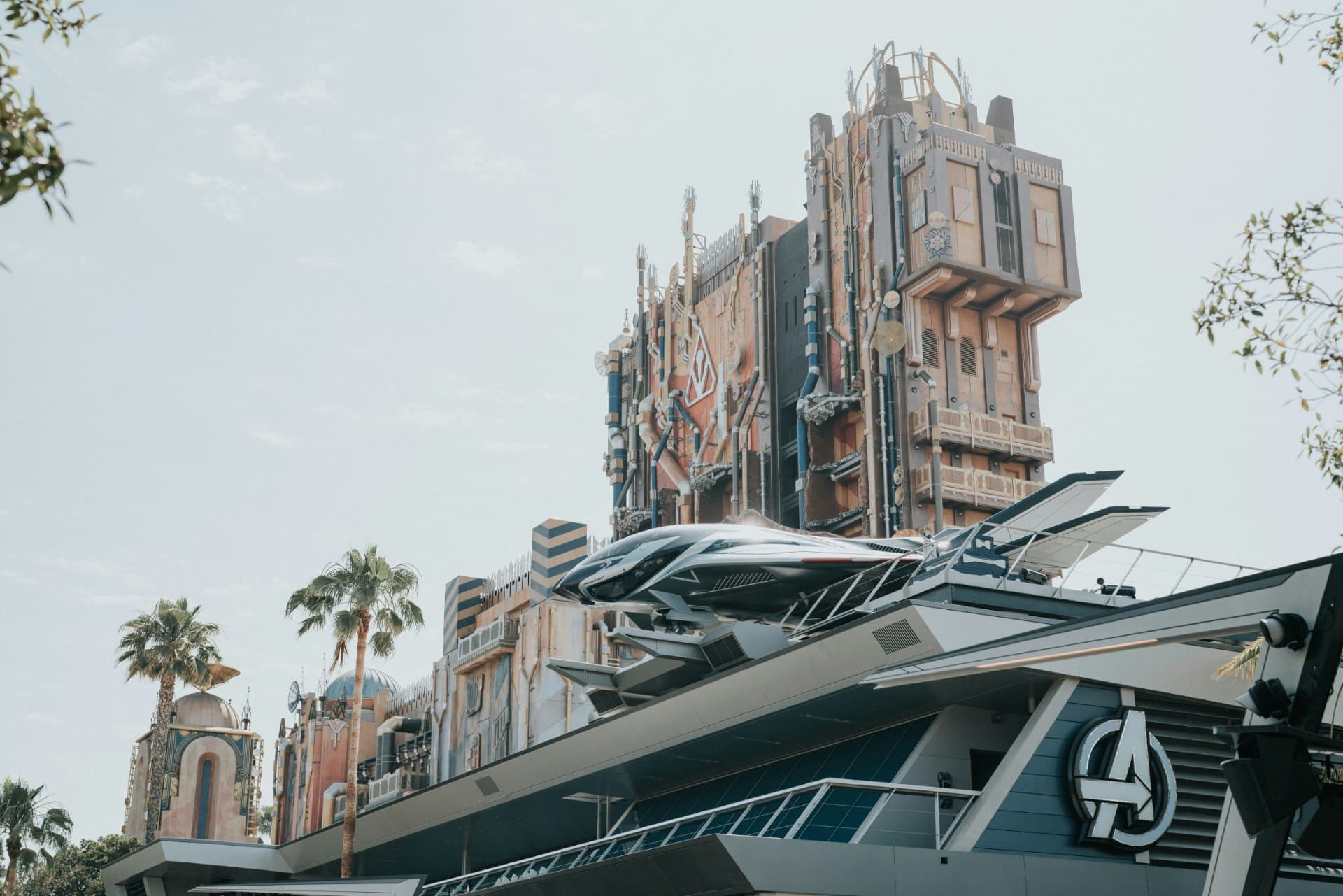
The building's exterior is a dramatic departure from everything surrounding it: vivid colors, massive pipework, alien industrial aesthetic, and an overall visual statement that reads as genuinely extraterrestrial against the California sky. Three stories of the building extend below ground level.
The Quinjet mounted on the building exterior above the main entrance is one of the most impressive environmental details in Avengers Campus — a full-scale prop positioned as though it has just landed on the fortress roof. Most guests walking below it do not look up. Look up.
The History
Mission: BREAKOUT! opened in 2017, replacing The Twilight Zone Tower of Terror. When Disney announced the replacement in 2016, the fan response was largely negative — Tower of Terror had a devoted following and the swap to a Marvel IP was seen as a commercial rather than creative decision.
The reaction to the actual ride reversed that narrative almost completely. Mission: BREAKOUT! is now widely regarded as one of the best individual ride experiences at any Disney park globally. The randomized sequence mechanic, the quality of the Rocket animatronic, and the specific combination of music and drop physics created something that the original Tower of Terror never quite achieved: genuine reride compulsion.
Part 2 — The Sequences
This is the feature that separates Mission: BREAKOUT! from every other drop tower ever built. Completely different ride experiences, each with its own song from Star-Lord's Awesome Mix Tape, its own specific drop pattern, and its own visual sequences of the Guardians making their escape.
The system randomly selects one sequence per ride. You cannot choose which one you get. You cannot reliably predict which one is coming. The only way to experience every sequence is to ride multiple times — which is exactly what Disney intended.
The Songs and Their Characters
Each sequence is associated with one of the Guardians and a specific classic rock or pop song. The pacing of the drops, the specific weightlessness moments, and the visual content on the screen panels throughout the shaft all correspond to the song and character assigned.
"Come and Get Your Love" (Redbone) — Star-Lord
The most upbeat sequence. The drops sync with the opening energy of the song with a particular emphasis on the guitar riff moments.
"Free Bird" (Lynyrd Skynyrd) — Yondu
The longest song of the set and the sequence with the most sustained drop moments. The instrumental section of Free Bird aligns with the most intense drop sequence of any version.
"Surrender" (Cheap Trick) — Groot
A personal favorite. The Cheap Trick sequence has the most rhythmically synchronized drop pattern — the ride drops hit specific beats in the song with a precision that makes the whole experience feel like a choreographed performance rather than a drop tower.
"Burning Love" (Elvis Presley) — Drax
The most unexpected song of the set. Elvis on a Marvel drop tower works better than it has any right to. The sequence features some of the most dramatic visual moments — Drax visible through the shaft doors in various combat situations — and the Elvis vocal moments sync with specific drop and recovery beats.
"I Want You Back" (Jackson 5) — Gamora
The fastest-paced sequence. The Jackson 5 track has a tempo that drives the drop pacing into a more staccato pattern than the slower songs.
"Rattlesnake" (St. Vincent) — Mantis
The most unusual sequence. St. Vincent's track is more contemporary and angular than the other songs, and the drop pattern reflects that — less predictable, more abstract in its timing.
Which sequence is best? This is subjective. My personal ranking: Free Bird for physical intensity, Surrender for rhythmic precision, Come and Get Your Love for emotional connection to the characters. But the honest answer is that the best sequence is whichever one you have not had yet.
Part 3 — The Queue
The Collector's Fortress queue is one of the most elaborately designed pre-ride environments at DCA. Most guests walk through it at speed. These are the things worth slowing down for.
The Fortress Exterior Approach
The walk from the Avengers Campus main path to the fortress entrance passes through a deliberately designed atmospheric corridor. Look at the architectural details of the surrounding buildings — the Avengers Campus buildings are designed to appear as though they have sustained superhero battle damage, with structural repairs visible and defensive modifications evident throughout.
The fortress exterior itself rewards upward attention. The scale of the building only becomes apparent from specific vantage points. Stand at the corner of the building and look directly up the side — the height is genuinely shocking from ground level in a way that the standard approach angle does not reveal.
Inside the Fortress — The Collector's Collection
The queue winds through the interior of the Collector's Fortress past an extraordinary prop collection representing Tivan's acquisition of specimens from across the universe. Each display case contains a specific creature or artifact from Marvel comics and films — many of them recognizable to dedicated Marvel fans, others entirely invented for the queue environment.
Cosmo the Space Dog — visible in a display capsule in the queue. The Soviet space dog from the comics who later appears as a recurring character in the Guardians franchise. The display positions Cosmo as one of the Collector's prized acquisitions before Cosmo's eventual liberation.
The Darkforce Specimen — one of the more visually striking display cases, a contained sample of what appears to be living darkness with its own containment field parameters displayed on an attached panel.
The Symkarian Battle Arms — an elaborate alien weapon system displayed in its own lit case. The detail in the construction and the accompanying information panels make this one of the most interesting props in the queue.
The Rocket Audio-Animatronic — before the loading area, Rocket appears in a small side office in an elaborate pre-drop encounter. The animatronic uses servo motor technology that produces remarkably lifelike micro-movements — the ear flicks, the subtle weight shifts, the eye tracking are all more sophisticated than standard Audio-Animatronic technology. Watch Rocket's face specifically during the scene. The expression range is genuinely impressive.
The Two-Floor Loading Area
The loading area has two floors — guests are directed to either upper or lower boarding based on cab availability. Both floors experience the identical ride. The upper floor requires stair access. If a member of your party cannot navigate stairs, notify the cast member at the check-in podium before entering the loading area so they can route your group appropriately.
Part 4 — Wait Times and Timing (One Sourced Average, the Rest My Opinion)
The average posted standby wait for Mission: BREAKOUT! is 51 minutes (average posted standby wait, Sept 10, 2025 to Oct 14, 2026, per ThemeParks.wiki data). That is an all-hours, all-year average, not a live number or a peak. Everything else in this part is my opinion, and I have no sourced wait numbers for specific hours, days or seasons. Check the Disneyland app for live waits.
My Take on the Daily Pattern: Ride Early
In my opinion, Mission: BREAKOUT! is a ride where standby gets worse as the day goes on, so the earlier you ride standby, the better.
In my opinion, the ride does not recover meaningfully in the evening the way Radiator Springs Racers or Space Mountain do.
The implication (my opinion): Every minute you delay riding Mission: BREAKOUT! on a peak day costs you. If you are going to ride standby, rope drop is, in my opinion, the only rational window. If you are going to ride Lightning Lane, book it as the first booking of the morning before return windows push later into the day.
The evening window specifically: In my opinion, this is the worst window to ride Mission: BREAKOUT! on any day with meaningful crowds. I would avoid standby in the evening.
Seasonal Timing — My Opinion
Summer:
In my opinion, summer is when Mission: BREAKOUT! runs at some of its highest standby waits of the year, and summer mornings fill fast.
In my opinion, Single Rider and Lightning Lane Multi Pass are the most rational access strategies during the summer season outside of the first minutes after park open. In my opinion, Multi Pass windows can push to the afternoon on summer peak days when booked at park entry.
Fall:
In my opinion, September is when Mission: BREAKOUT! becomes more manageable on standby. Schools return to session and summer crowds clear.
In my opinion, October brings Halloween Time and with it a crowd increase on weekends. But the more important October story for this ride is the Monsters After Dark seasonal overlay — covered in detail in Part 6 below.
November:
In my opinion, one of the two best windows of the year for Mission: BREAKOUT! access. The same crowd dynamic that makes September good applies through most of November.
Thanksgiving week through year end:
In my opinion, peak crowds return and stay through the holidays. Thanksgiving week, the Christmas holiday window, and New Year's produce summer-like standby conditions. Lightning Lane and Single Rider are essential.
Part 5 — The Three Access Options
Option 1 — Standby
The standard queue. The most complete experience — you walk through the full Collector's Fortress environment and encounter every queue element described in Part 3.
In my opinion, the rope drop window is the only standby window worth using on any peak crowd day. That window closes fast, and the standby line builds quickly after it.
On genuine low-crowd days, in my opinion, standby can be a reasonable alternative to Lightning Lane if the posted wait looks reasonable when you arrive.
Option 2 — Single Rider
In my opinion, Single Rider is the most underused strategy for Mission: BREAKOUT! and produces the biggest wait reduction of any Single Rider option at either park.
The Single Rider line at Mission: BREAKOUT! fills empty seats in partially full ride vehicles throughout the day. Because the ride loads in groups and groups are rarely in exact multiples of the vehicle capacity, empty seats are frequent. In my opinion, that makes Single Rider usually far shorter than standby on busy days. I have no sourced Single Rider wait figure, so check the Disneyland app for live waits.
What you give up with Single Rider:
You will be split from your group. Each rider in the Single Rider queue is individually inserted into an available seat in a ride vehicle — you will not sit with the people you came with. You will not experience the ride together. If sharing the experience with your group is essential, Single Rider is not the right choice.
You also skip portions of the queue narrative environment. The Single Rider path bypasses sections of the Collector's display hall to move more efficiently to the loading area.
When Single Rider is the right call:
Adults and older children who are comfortable splitting up and who care primarily about riding the attraction efficiently. Anyone visiting on a peak summer day who has already experienced the full standby queue environment on a previous visit and does not need to see it again. Guests who want to ride multiple times and are willing to prioritize ride count over group experience.
Mateo's Take: I use Single Rider for Mission: BREAKOUT! on every peak day visit after my first ride of the day. My first ride is usually Lightning Lane so my group can experience it together. Every subsequent ride is Single Rider. The efficiency gap is too large to ignore on a busy day.
Option 3 — Lightning Lane Multi Pass
Mission: BREAKOUT! is included in Lightning Lane Multi Pass — not as a Single Pass attraction but as a standard Multi Pass selection.
Book it as your first Multi Pass booking of the morning the moment you enter the park. In my opinion, on peak summer days early-morning Multi Pass windows for Mission: BREAKOUT! can already be returning afternoon slots, and by mid-morning the available windows can push later still on the busiest days.
Per Disney's Lightning Lane Passes page (read October 28, 2026), after redeeming a selection (or after 2 hours have passed since you made your selection), you can book your next Lightning Lane Multi Pass attraction, subject to availability.
Lightning Lane on peak days: Book at park entry, accept whatever return window is available, and plan your morning around standby rides for other attractions while your Mission: BREAKOUT! window approaches. Single Rider for any additional rides later in the day.
Lightning Lane on moderate days: In my opinion, the morning booking window often delivers a same-morning return time rather than an afternoon slot. Book your next Multi Pass attraction as soon as Disney's rule above allows.
Part 6 — Monsters After Dark: The Halloween Overlay
This is the most important seasonal information in this guide and the one that most guests do not know about until after they have been to DCA.
What Monsters After Dark Is
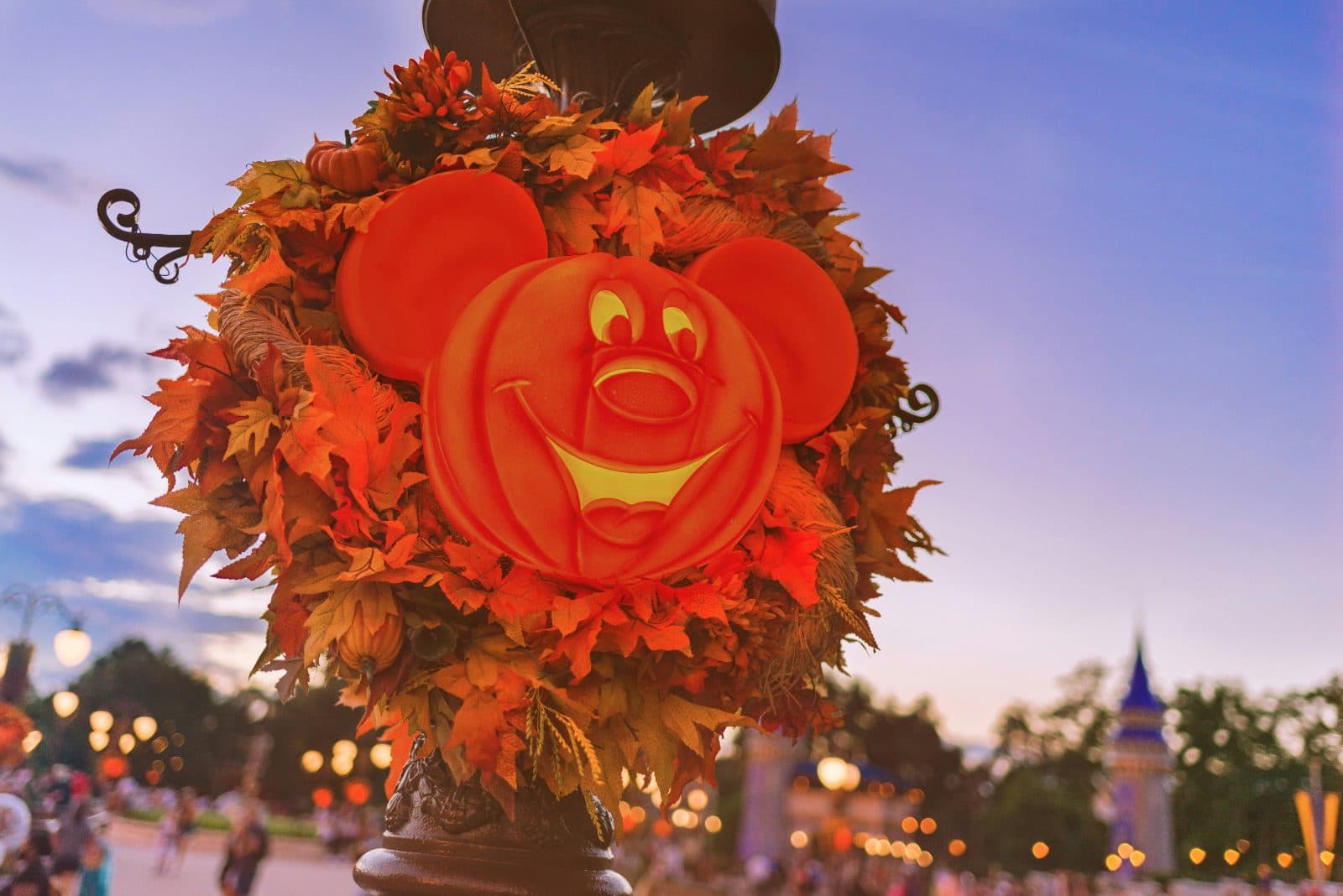
During Halloween Time, Mission: BREAKOUT! transforms into Guardians of the Galaxy — Monsters After Dark in the evening hours. Check Disney's calendar and the Disneyland app for the Halloween Time dates and the switchover time.
Monsters After Dark is not a minor decoration adjustment. It is a completely different ride experience:
New story: Baby Groot has been left behind in the fortress when the other Guardians escaped. You are now riding to rescue Baby Groot from the monsters that have been released when the Collector's containment systems failed.
New song: "Immigrant Song" by Led Zeppelin plays as the soundtrack for the Monsters After Dark sequence — a single unified song rather than the randomized selection of the standard ride.
New visuals: The screen sequences throughout the shaft show monsters from the Collector's collection running loose through the fortress. Baby Groot appears in multiple scenes in various states of distress and eventual rescue.
New atmosphere: The lighting, sound design, and overall mood of the experience shift to a darker, more intense register than the daytime versions. The ride feels genuinely Halloween-appropriate in a way that adds to rather than replaces the original experience.
Why Monsters After Dark Is Worth Specifically Targeting
In my opinion, Monsters After Dark is one of the strongest seasonal overlays at the Disneyland Resort.
The standard ride is excellent. Monsters After Dark is a completely different experience that uses the same physical infrastructure to tell a different story with a different song and different visual content. It is not a decoration upgrade — it is a different ride.
Led Zeppelin's "Immigrant Song" is specifically extraordinary in the context of a drop tower ride. The riff timing synchronizes with the drop sequences in a way that makes the ride feel even more physically intense than the daytime versions — the music drives the physical sensation rather than accompanying it.
How to experience Monsters After Dark:
The switchover happens in the evening during the Halloween season; check the Disneyland app for timing. In my opinion, the line for the daytime version can slow or pause briefly during the transformation. In my opinion, Single Rider for Monsters After Dark can run efficiently in the evening because the novelty brings additional guests to standby while Single Rider remains underused.
The key warning: If you visit DCA during Halloween Time and leave before the evening switchover, you will miss what I think is the best version of this ride that runs all year. Stay for Monsters After Dark. It is worth restructuring your entire evening around.
Part 7 — What to Expect If You Have Never Ridden a Drop Tower
Mission: BREAKOUT! is not a gentle introduction to drop towers. It is one of the most intense drop tower experiences available at any theme park, and the description of it as a Guardians of the Galaxy family adventure undersells the physical intensity.
The Specific Physical Experience
The elevator cab rises to the top of the building. The doors open to the first scene. And then the drops begin.
Unlike traditional drop towers that fall at the speed of gravity, many of Mission: BREAKOUT!'s drop sequences use assisted freefall — the elevator is propelled downward faster than gravity, creating genuine negative-G conditions. You will rise off your seat. Your stomach will reach your throat. The sensation lasts only seconds per drop event, but the first time you experience negative-G weightlessness at height and speed it is significantly more intense than "I sat on a Ferris wheel" or even "I rode a roller coaster."
The drops are unpredictable in timing and pattern because each sequence is different. There is no "one big drop" that you can brace for. The ride rises, drops, rises, holds, drops faster, rises again — the sequence varies and the unpredictability is part of the design. Guests who have ridden the same sequence multiple times know the pattern. First-timers do not.
If You Are Nervous
The height requirement is 40 inches, not 40 years of experience with drop towers. Guests who are eligible by height but uncertain about intensity should know:
The ride is shorter than it feels. In my opinion, the active drop sequences are brief compared with the ascent, the story sequence with Rocket, and the gradual descent back to ground level.
The ride is louder than guests expect. The music plays at concert volume inside the cab. The sound of the machinery, the Rocket animatronic's voice, and the drop sequence sound effects are all amplified in the enclosed space. Guests with sound sensitivity should be prepared.
There is no way to grade yourself into Mission: BREAKOUT! from a gentler experience first. This is the most intense attraction at DCA and should be treated as such by first-time riders and by parents deciding whether their height-eligible child is ready.
Preparing Children
Children who meet the 40-inch requirement and are comfortable with loud sounds and unexpected drops will typically love Mission: BREAKOUT! The Guardians of the Galaxy branding, the music, and Rocket's humor create a fun-forward energy that makes the intensity feel like excitement rather than threat for most children who are temperamentally ready.
Children who startle badly at sudden sounds, who are uncomfortable in dark enclosed spaces, or who have not previously handled any coaster or drop experience should approach this ride cautiously even at the height minimum. The randomized drop timing specifically means that bracing strategies do not work — you cannot prepare for a drop you cannot predict.
Have an honest conversation about what the ride involves before you join the queue. A child who knows there will be loud music and sudden drops and has chosen to ride anyway will have a much better experience than a child who is surprised.
Part 8 — Avengers Campus Context
Mission: BREAKOUT! is the most technically spectacular attraction in Avengers Campus but the campus as a whole is worth understanding before you visit the ride. The land operates differently from every other area at DCA.
The In-Universe Rules
Every cast member in Avengers Campus is in character as a citizen or employee of the campus — S.H.I.E.L.D. agents, Stark Industries employees, campus recruits. They do not break character. They respond to guests in-universe. They acknowledge the Avengers, the Guardians, and the Marvel story events as real. They do not acknowledge Disneyland, DCA, or anything outside the campus narrative.
Engage with this rather than breaking it. Ask cast members questions in-universe. The interactions produced by treating Avengers Campus as the Marvel universe it is designed to be are some of the most memorable guest experiences at either park.
The Character Performances
Characters appear throughout Avengers Campus on irregular, unannounced schedules — not in formal meet-and-greet queues but as in-universe events. Spider-Man swings on webs above the campus. Doctor Strange performs magic demonstrations. Thor appears with warriors from Asgard. Black Panther arrives with Wakandan escorts.
These appearances are theatrical performances rather than handshake meets. They last several minutes, involve genuine choreography and in-universe storytelling, and are among the most dynamic character encounters at either park.
Check the Disneyland app under "Entertainment" for any scheduled Avengers Campus character appearances but know that the best encounters are the unannounced ones. If you see a crowd forming in Avengers Campus, something is happening. Stop and watch.
The Quinjet
The full-scale Quinjet mounted above the fortress entrance is one of the most impressive physical set pieces at the Resort. Stand at the main campus entrance and look up at the building roof. The jet reads as genuinely landed rather than mounted — the weathering, the landing gear position, and the scale all contribute to an illusion that most guests walking below it miss entirely because they are not looking up.
Mateo's Complete Mission: BREAKOUT! Day Plan
Before you arrive: Add Lightning Lane Multi Pass to your tickets in advance. The moment you scan into DCA: book Mission: BREAKOUT! for the earliest available return window. In my opinion, on summer peak days this may already be pushing later into the day — accept the window and plan around it.
At park open — rope drop: Walk to Cars Land for Radiator Springs Racers standby. In my opinion, the Racers rope drop standby window is the better rope drop play than Mission: BREAKOUT! standby, because Cars Land clears faster from the entrance. I have no sourced rope drop wait numbers for either ride.
Mid-morning — first ride: Use your Lightning Lane booking for Mission: BREAKOUT! Walk slowly through the queue. Let Rocket's animatronic scene play fully. Experience the sequence you get without spoiling it for yourself by checking which song is playing before the ride begins.
Afternoon — additional rides: Single Rider for any subsequent Mission: BREAKOUT! rides. In my opinion, the Single Rider efficiency gap on a busy afternoon is the widest available at either park. Accept that you will not be with your group. Accept the different sequences each ride. The goal is maximum sequence coverage.
During Halloween Time — stay for Monsters After Dark: After the evening switchover, rejoin the Single Rider or standby queue for Monsters After Dark. This is the primary scheduling commitment of any DCA visit during the Halloween season. Monsters After Dark at dusk, with the campus lighting activated and the Led Zeppelin soundtrack — it is the reason to be at DCA in October.
Quick Reference — Mission: BREAKOUT!
Category | Details |
|---|---|
Land | Avengers Campus, Disney California Adventure |
Height requirement | 40 inches (per our ride data) |
Lightning Lane type | Multi Pass (not Single Pass) |
Single Rider available | Yes |
Rider Switch available | Yes |
Average posted standby wait | 51 minutes (average posted standby wait, Sept 10, 2025 to Oct 14, 2026, per ThemeParks.wiki data). An all-hours, all-year average, not a live number or a peak. |
Worst standby window | Evening — avoid on any peak day (my opinion) |
Best standby window | Rope drop only on peak days (my opinion) |
Single Rider wait | No sourced figure. Check the app for live waits. |
Seasonal overlay | Monsters After Dark (Halloween Time, evening transition) |
Monsters After Dark song | "Immigrant Song" — Led Zeppelin |
Sequences | Multiple, randomized |
Mateo "The Map" Morales
Lead Disney Parks Specialist
Born and raised in Anaheim — Disneyland's backyard. Mateo has been riding Space Mountain since before he could tie his shoes, and he still treats the first 90 minutes of rope drop as the whole game.
From
Anaheim, CA
Parks Visited
6 Disney Parks
Specialty
Lightning Lane Strategist